Player Segmentation
The product a player uses tells you only part of the story. This module introduces six segments based on a person’s relationship to gambling, alongside five product verticals. You will use these to plan relevant communications and interpret the available signals with care.
Operator note: Replace
{{PROGRAM_NAME}}with your program name throughout. The six segments, the five verticals, and the three identification levels are part of the brand system and should not be modified. What you do adapt is the example scenarios and the data you read them from — your product’s touchpoints and analytics. Narrator scripts should be recorded in the Playbook Tier 1 voice.
Program: Brand Foundations | Duration: ~20 min | Prerequisites: Voice & Tone
Quick-scan index
| Section | What it covers | Time |
|---|---|---|
| Learning objectives | What you’ll know after this module | — |
| Section 1: A New Segmentation Model | Six relationship-based segments | ~5 min |
| Section 2: Product Vertical Overlay | How segments and verticals combine | ~4 min |
| Section 3: Identifying Segments in Practice | Three levels of identification | ~4 min |
| Section 4: Adapting Messages | Rules for segment-specific messaging | ~4 min |
| Module test | 6 graded questions, 80% to pass | ~3 min |
| Key takeaways | Summary | — |
| References | Links to Playbook brand assets | — |
Learning objectives
After completing this module, you will be able to:
- Name the six {{PROGRAM_NAME}} segments and explain why the same player can be in two segments at once
- Map the five product verticals to a real scenario you’d ship next quarter
- Read behavior signals to pick the segment a player most likely belongs to — and adapt the message accordingly
Section 1: A New Segmentation Model
Reading
Use a person’s current task, knowledge and stated needs to choose useful content. The model describes a relationship to a product; it is not a clinical assessment or a permanent label.
| Content context | Evidence to look for | Content response |
|---|---|---|
| New/Novice | New to this product, or asking for its basics | Explain the rules, terms and choices |
| Recreational | Familiarity with the product and a steady pattern in the supplied context | Useful comparisons, myth explanations and available tools |
| Enthusiast | Detailed product knowledge and an explicit interest in deeper material | More detailed explanations without repeating known basics |
| At-Risk | Changes from the person’s baseline or other indicators that warrant attention | Follow the operator’s review process; make tools and support clear |
| In-Crisis / immediate support | Expressed distress or an explicit request for immediate help | Respond directly and follow the relevant support or escalation process |
| Friends & Family | A request about someone else’s gambling | Resources for the concerned person, including conversation and support options |
Interpret the evidence cautiously. High engagement does not establish safety, and a late session does not diagnose difficulty. A support-page visit may be research. A request to pause or self-exclude must be honored and explained without labelling the person as being in crisis.
Friends and family may also gamble themselves. This content route reflects whom they are asking about, not a claim about their own history.
The same person can need advanced casino content and beginner sportsbook content. Their needs can also change over time. Start with the general voice and adapt only when the task, campaign or evidence calls for it.
Narrator Script
Narrator: [transition slide] Traditional gambling segmentation groups players by demographics — age, gender, location — or by product preference — sports bettors, casino players, lottery buyers. These categories describe what people do but tell you nothing about what content they actually need.
[pause 5s for learner reflection] A 22-year-old and a 55-year-old who both play recreationally and understand the odds need the same content. But a sports bettor who just placed their first parlay and one who tracks the vig across fifteen sportsbooks need completely different content — even though both are “sports bettors.”
[show six-segments grid] {{PROGRAM_NAME}} uses a relationship-based model instead. Six segments, defined by the player’s knowledge level, engagement pattern, and behavioral indicators. Three are engagement-focused. New or Novice players, encountering a product for the first time, who need foundational education. Recreational players, who play within their means with moderate knowledge and steady patterns — the majority of any player base. And Enthusiasts — highly engaged, deep product knowledge, they track their own play and want advanced content.
[pause 3s] Then three support-focused segments. At-Risk players, showing behavioral warning signs, who need tool visibility, not lectures. In-Crisis players, actively seeking help, who need immediate, frictionless access to support. And Friends and Family — people who aren’t players at all, who arrive searching “how to help someone who gambles too much” and need a completely separate entry point.
[show three-distinctions card] Three things make this model different from traditional approaches. It’s relational, not demographic. It’s product-contextual — a player can be Recreational in casino and New or Novice in sports at the same time. And it’s dynamic — players move between segments as their behavior changes.
[transition to exercise] Now try the exercise below to test your understanding — you’ll match six player descriptions to the right segment.
Exercise: Name That Segment
Type: name-that-segment
Instructions: Choose the content route each record supports. No route is a diagnosis or proof that someone is safe.
| Item | Correct | Distractor A | Distractor B | Feedback (correct) | Feedback (incorrect) |
|---|---|---|---|---|---|
| Which content route fits this person’s first visit to the product? | New/Novice | Recreational | Enthusiast | First visit, no previous play: start with the casino’s rules, terms and choices. | Better fit: New/Novice. Nothing shows familiarity yet: it’s a first visit with no previous play. |
| Which content route best fits the supplied poker context? | Recreational | New/Novice | At-Risk | They play weekly, explain pot odds and stay within their deposit limit. That’s a Recreational content fit. | Better fit: Recreational. Explaining pot odds shows they know the game, and weekly play within their limit is a steady pattern. |
| Which content route fits this request for product detail? | Enthusiast | Recreational | At-Risk | Detailed knowledge and self-tracking call for more advanced content. Frequency alone wouldn’t justify it. | Better fit: Enthusiast. They track their own statistics, follow product news and keep the same budget. Frequency alone shows neither expertise nor safety. |
| Which content route should trigger attention to these recent changes? | At-Risk | Enthusiast | In-Crisis | Several changes from baseline together call for the operator’s review process, with tools and support easy to reach. | Better fit: At-Risk. Doubled deposits, longer sessions and two deposit limit increases together call for review. The record has no direct request for help. |
| Which route fits this person’s explicit request for immediate help? | In-Crisis | At-Risk | Recreational | They asked for help now, so direct support comes first. Explain self-exclusion’s duration and scope accurately, and follow the support process. | Better fit: In-Crisis. Their direct request for help now decides it, not the self-exclusion page they opened. Offer direct support. |
| Which content route fits this visitor’s question? | Friends & Family | In-Crisis | At-Risk | A question about their partner’s gambling calls for conversation and support options. The visitor’s own gambling history is unknown. | Better fit: Friends & Family. The question is about their partner’s gambling. Don’t assume anything about the visitor’s own gambling. |
Section 2: Product Vertical Overlay
Reading
A segment describes the relevant relationship or need. A product vertical identifies the game context. Use both when choosing an explanation.
| Vertical | Examples of information a person may need |
|---|---|
| Sports betting | Reading a price, implied probability, margin and accumulator conditions |
| Casino | Game rules, payouts, house edge, RNG and session records |
| Lottery | Draw rules, prize probabilities and payout structure |
| Poker | Pot odds, rake and the difference between skill and variance |
| Bingo | Game format, ticket counts and prize conditions |
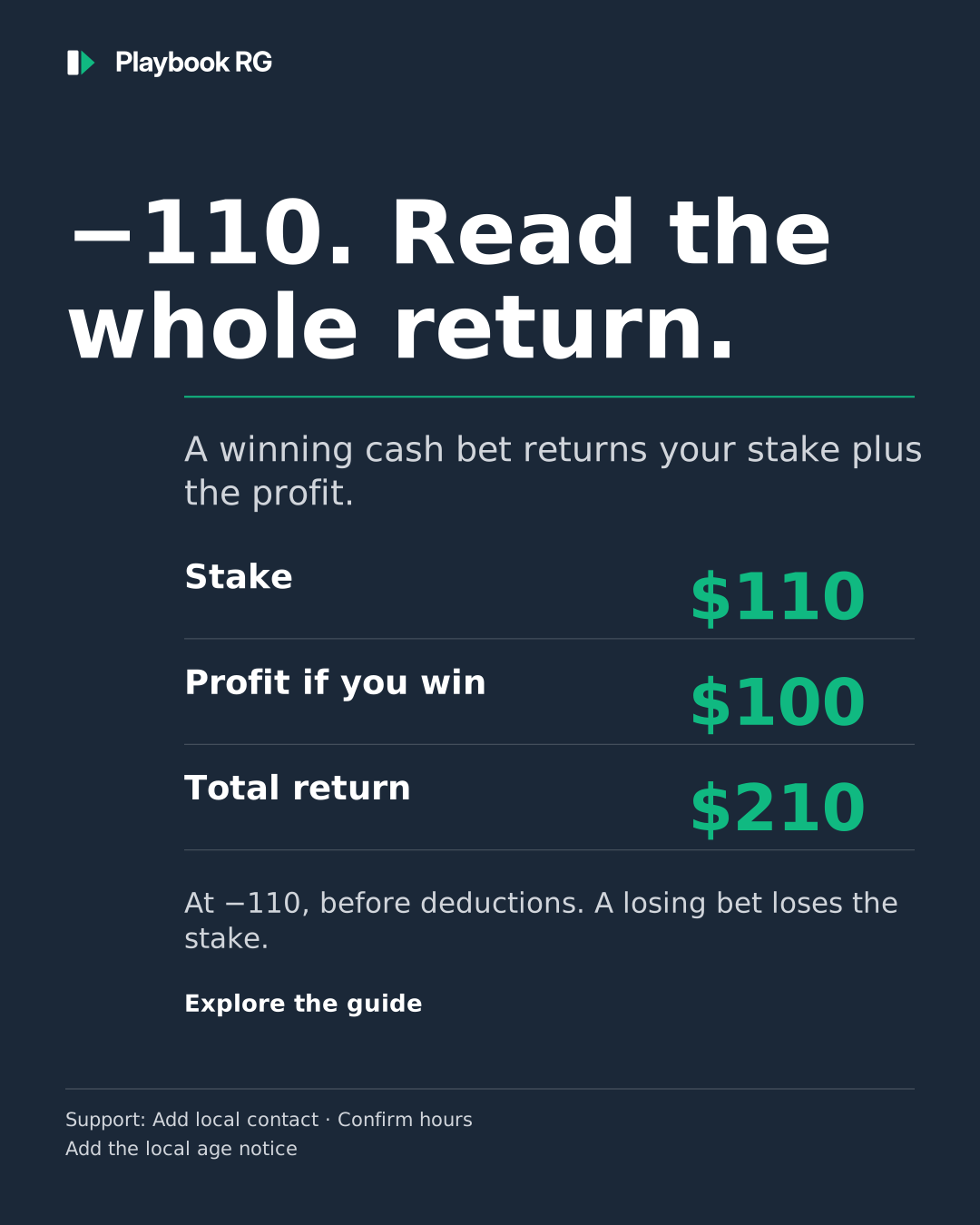
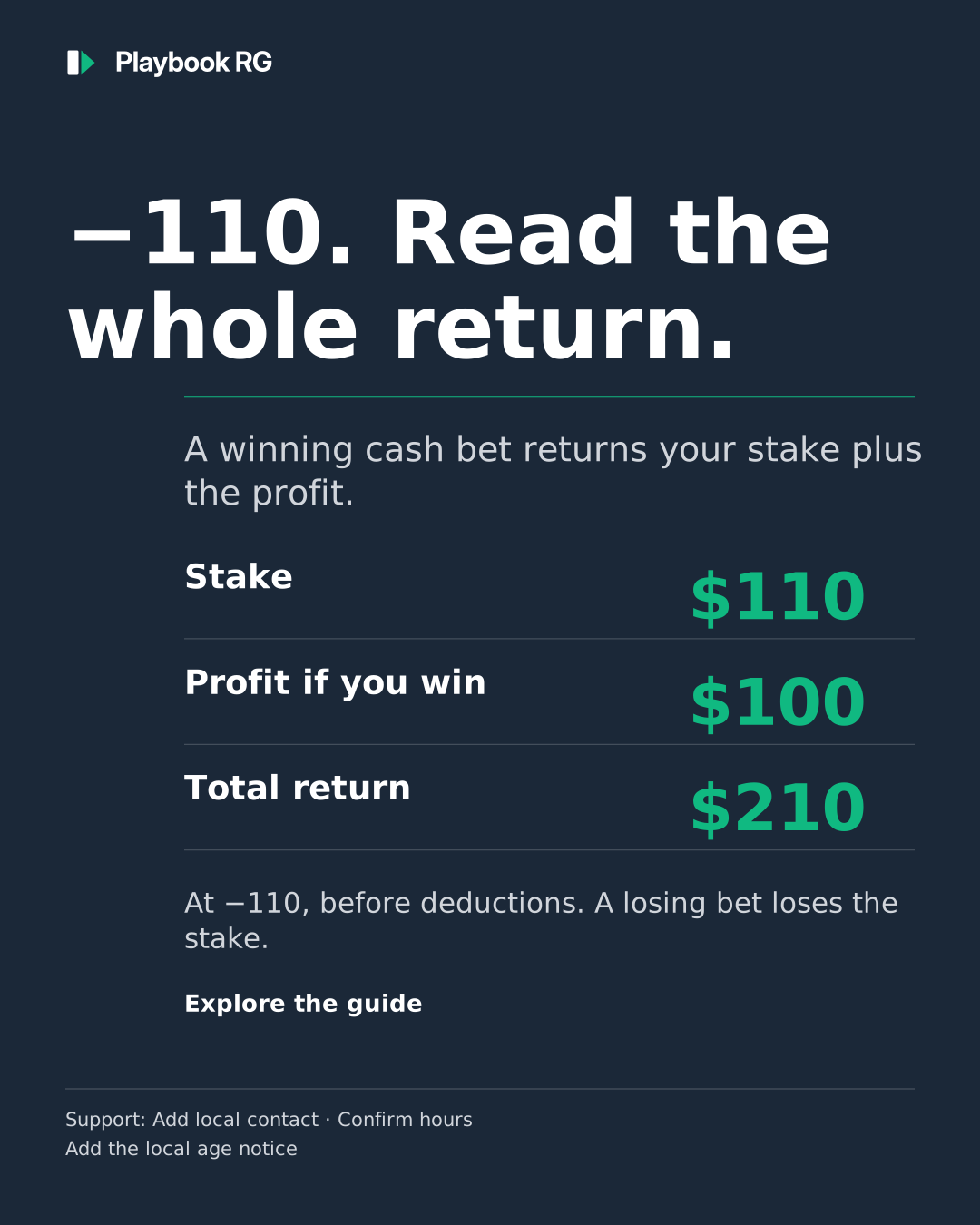
For a person new to sports betting, explain what a −110 line means before discussing margin. For someone who already understands that price, a comparison of markets may be more useful. Experience with another product does not establish knowledge of this one.
Avoid broad claims such as “every game has a house edge” when the relevant cost may instead be rake or a margin. Give the exact product rules and conditions. A percentage from another game is not a substitute.
Narrator Script
Narrator: [transition slide] Segments describe who the player is in relationship to gambling. Product verticals describe what they’re playing. These are independent dimensions that overlay each other — think of it as a grid.
[show segment-vertical grid] {{PROGRAM_NAME}} covers five verticals: sports betting, casino, lottery, poker, and bingo. Each has its own knowledge domains, its own misconceptions, and its own tool categories.
A Recreational casino player needs session management tools and myth-busting about hot and cold machines. A Recreational sports bettor needs bankroll planning and education about vig and parlay margins. Same segment, completely different content.
[pause 3s] Without this overlay, you end up with generic content like “Know the odds!” — too vague for anyone to act on. Which odds? Parlay odds? Slot RTP? Lottery jackpot probability? Each needs a completely different explanation. Or you end up with product-only segments like “Sports Bettors” — which ignores that a first-time sports bettor and a five-year veteran need totally different things.
The overlay gives you specificity. A New or Novice plus Sports player needs to learn what a minus-110 line means. A Recreational plus Sports player already knows that — they need bankroll planning for their NFL season.
[transition to tool] Same product, different relationships, different content. Use the Vertical Explorer tool below to see how each vertical breaks down across segments, core knowledge areas, common misconceptions, and key tool categories.
Section 3: Identifying Segments in Practice
Reading
Use the information you have, and be clear about what it cannot establish.
Level 1: Current touchpoint. The page or question gives a clue about the immediate task. A beginner guide suggests a need for an explanation. A support page calls for an easy route to support. Neither page view establishes a permanent segment or diagnosis.
Level 2: Basic account context. Account age, product use and recent activity can help choose relevant material. A new account is new to your platform, but the person may have experience elsewhere. Product knowledge needs evidence of its own.
Level 3: Patterns over time. Compare deposits, stakes, session duration and limit changes with the person’s baseline. Look for combinations of changes and follow the operator’s established review process. Do not use a single unusually large bet, late session or product change as a diagnosis or a guarantee of safety.
Explicit requests take priority. Someone asking for help does not need to satisfy a behavioral model first. Someone choosing a pause or self-exclusion needs accurate information and the requested process, whether or not they describe distress.
Operator integration point: Use your internal policies for risk indicators, review thresholds, escalation and contact restrictions. These teaching categories do not replace that process.
Narrator Script
Narrator: [transition slide] You don’t need perfect data to segment your players. {{PROGRAM_NAME}} uses three levels of identification that work at any level of data sophistication.
[show Level 1 card] Level 1 is structural identification — no data needed. Your product already tells you who’s where. A player in onboarding? New or Novice. Browsing the sportsbook? Sports vertical. On the support page? Potentially In-Crisis. Arrived via a “worried about someone” link? Friends and Family. Structural identification isn’t a compromise — it’s often more accurate than predictive models, because it’s based on what players are actually doing right now.
[show Level 2 card] Level 2 uses basic data — account age, deposit frequency, session counts. Consistent activity over months with no escalation points to Recreational. Multi-vertical usage with high frequency suggests Enthusiast. First deposit and first session is reliably New or Novice.
[show Level 3 card] Level 3 is behavioral analytics — the most powerful level. With full behavioral data, you can detect At-Risk patterns: escalating deposits, chasing losses, increasing session length, repeated limit increases, late-night play spikes, and out-of-pattern behavior.
[pause 3s] No single indicator is definitive. Patterns matter. A one-time large bet during the Super Bowl is normal. A sustained increase in stake size over three weeks is a signal. Start at Level 1. Move to Level 2 when you have the data. Level 3 is a long-term goal.
Section 4: Adapting Messages
Reading
Adapt the explanation’s depth, vocabulary and tone while keeping the facts and qualifications intact.
- Check what the person needs now. An explicit question is better evidence than a demographic assumption.
- Use the product’s terms and explain unfamiliar ones. “Rake,” “margin” and “RTP” describe different things.
- Build on demonstrated knowledge. Offer detail when asked; do not assume all experienced players understand every mechanic.
- Keep tools and support easy to reach. When difficulty is expressed or indicated, follow the support process rather than responding only with education.
- Keep the general voice unless adaptation is useful. A targeted message should solve a specific communication need.
Reassess when the context changes. A player may learn the basics, ask for deeper material or start using another product. A pattern of escalating activity warrants review. A direct support request calls for support now.
If activity later stabilizes, do not infer that harm has ended or automatically restore marketing. Keep self-exclusion, account and contact restrictions in force until the applicable process changes them. These safeguards take priority over content segmentation.
Narrator Script
Narrator: [transition slide] The same core message adapts to different segments by changing tone, depth, and framing — not the underlying information. The fact doesn’t change. The lens does.
[show five-rules card] Five rules govern adaptation. Same fact, different depth — New or Novice needs the definition, Recreational needs the comparison, Enthusiast needs the advanced angle. Match their language — sports bettors say “vig,” poker players say “rake,” casino players know “RTP.” Respect what they already know — don’t explain house edge to an Enthusiast. At-Risk and In-Crisis get tools, not education — when behavioral indicators suggest difficulty, more information isn’t the answer. And the general voice works for most content — only adapt when the touchpoint or data demands it.
[transition to tool] Use the Message Adapter tool to see this in action. Start with the core message “Every game has a house edge” and click each segment to see how the same truth adapts. Then add the vertical overlay to see how even a single segment’s message changes by product.
[pause 3s] After that, you’ll see the segment movement patterns — how players transition between segments and how your content should respond. The most important content moments happen at these inflection points, not during steady states. Time to test what you’ve learned.
Module Test
Narrator: Time to test what you’ve learned. Six questions covering the segmentation model, product vertical overlay, identifying segments, and adapting messages. You need 80 percent to mark this module complete. Take your time — several questions test the product-contextual nature of the model.
Question 1
Assesses: Learning objective 1
Stem: What is the fundamental basis for {{PROGRAM_NAME}}‘s segmentation model?
| Option | Text |
|---|---|
| A | Demographics — age, gender, location |
| B | Product preference — which games they play |
| C | Relationship to gambling — knowledge level, engagement patterns, and behavioral indicators |
| D | Spending level — how much they deposit |
Correct: C
Explanation: Needs follow someone’s relationship to gambling (knowledge, engagement and behavior), not age or product. Casual players who know the odds are Recreational at 22 or 55.
Source: Audience Segmentation
Question 2
Assesses: Learning objective 2
Stem: A loyal lottery player of 10 years signs up for your new sportsbook product. What segment are they for sports betting content?
| Option | Text |
|---|---|
| A | Recreational — they’re an experienced gambler |
| B | Enthusiast — they clearly love gambling if they’re adding products |
| C | New/Novice — they’re new to THIS specific product |
| D | At-Risk — adding a new product could signal escalation |
Correct: C
Explanation: They’re asking what −110 means, so start there. Years of lottery play don’t show sports betting knowledge or decide their segment in either product.
Source: Audience Segmentation
Question 3
Assesses: Learning objective 2
Stem: What is the relationship between segments and product verticals in {{PROGRAM_NAME}}‘s model?
| Option | Text |
|---|---|
| A | Each vertical has its own set of segments |
| B | Segments and verticals are the same thing |
| C | Segments describe the player’s relationship; verticals describe what they play — they overlay independently |
| D | Verticals only matter for New/Novice players |
Correct: C
Explanation: Segments and verticals form a grid. Recreational sports bettors and Recreational casino players have the same relationship to gambling but need different content.
Source: Audience Segmentation
Question 4
Assesses: Learning objective 3
Stem: How should you handle a player who is an Enthusiast in casino but has just started using your sportsbook?
| Option | Text |
|---|---|
| A | Treat them as an Enthusiast across all products |
| B | Treat them as New/Novice across all products |
| C | Enthusiast for casino touchpoints, New/Novice for sportsbook touchpoints |
| D | Ask them to complete a knowledge quiz to determine their segment |
Correct: C
Explanation: Segments can differ by product. Keep Enthusiast content for casino, but start the sportsbook with New/Novice basics.
Source: Audience Segmentation
Question 5
Assesses: Learning objective 1
Stem: Which distinction best explains the different content responses to records A and B?
| Option | Text |
|---|---|
| A | At-Risk players lose more money |
| B | At-Risk describes indicators that warrant review; an explicit request for immediate help calls for direct support |
| C | They’re the same segment with different names |
| D | At-Risk is identified by operators; In-Crisis is self-identified |
Correct: B
Explanation: Record A’s changes need the operator’s review. Record B asks for support now: give it, without waiting for a classification. Neither is a diagnosis.
Source: Audience Segmentation
Question 6
Assesses: Learning objective 3
Stem: When should you use segment-specific messaging instead of the general {{PROGRAM_NAME}} voice?
| Option | Text |
|---|---|
| A | Always — every piece of content should target a specific segment |
| B | Only for At-Risk and In-Crisis players |
| C | When the touchpoint is inherently segment-specific, a campaign targets one segment, or behavioral data identifies a segment |
| D | Never — the general voice works for everyone |
Correct: C
Explanation: The general {{PROGRAM_NAME}} voice works for most content. Adapt only when the touchpoint, campaign or data calls for it, like a beginner sportsbook guide.
Source: Audience Segmentation
Key Takeaways
- The six content segments describe a person’s current relationship to a product. They are planning categories, not clinical diagnoses.
- Consider knowledge, current activity and stated needs. A person can be experienced in casino games and new to sports betting.
- Revisit the context as it changes. A category should not become a permanent label.
- Combine the segment with the product: Sports, Casino, Lottery, Poker or Bingo. Each has different rules and common misunderstandings.
- Use the information available, from the page someone has chosen to relevant account observations. Follow the operator’s process for handling behavioral data.
- Change the explanation’s depth and wording while preserving the facts. Provide requested support immediately, without waiting for a classification.
Source basis
You don’t need to read these, but they’re the published research behind the model’s claims — in case a colleague asks.
- Blaszczynski, A., Ladouceur, R., & Shaffer, H.J. (2004). A science-based framework for responsible gambling: The Reno Model. Journal of Gambling Studies, 20(3), 301–313. Why it’s here: the basis for treating the majority of players as recreational and informed-choice-capable — which is why the model’s three engagement segments, not a deficit label, are the default read.
- Currie, S.R., Hodgins, D.C., & Casey, D.M. (2013). Validity of the problem gambling severity index interpretive categories. Journal of Gambling Studies, 29(2), 311–327. Why it’s here: evidence that gambling involvement sits on a graded continuum rather than in fixed types — the empirical backbone for segments being dynamic and behavior-read, not static labels.
- Gainsbury, S.M., Russell, A., Hing, N., Wood, R., Lubman, D., & Blaszczynski, A. (2015). How the Internet is changing gambling: Findings from an Australian prevalence study. Journal of Gambling Studies, 31(1), 1–15. Why it’s here: documents the same player engaging across multiple products and channels — the real-world basis for the product-vertical overlay and the product-contextual rule.
References
| Resource | What to use it for |
|---|---|
| Audience Segmentation | Full segment definitions, product verticals, behavioral indicators |
| Brand Personality | Voice registers and tone guidance for each segment |