RG Foundations
Responsible gambling brings together information, player tools, protections, and support. This module introduces the Engagement Gap, the Information Gap, and the two-tier system. These concepts help you distinguish the task at hand and choose the right register: Tier 1 everyday play or Tier 2 support.
Operator note: Replace
{{PROGRAM_NAME}}with your program name throughout. The RG framework, the informed-choice premises, and the two-tier model are part of the brand system and should not be modified — they’re the foundation every later module builds on. What you do customize lives in_brand.yml: program names, helpline details, and the integration links to your own compliance and support programs. Narrator scripts should be recorded in the Playbook Tier 1 voice unless a section is marked Tier 2.
Program: Brand Foundations | Duration: ~20 min | Prerequisites: None
Quick-scan index
| Section | What it covers | Time |
|---|---|---|
| Learning objectives | What you’ll know after this module | — |
| Section 1: What does RG actually mean? | RG definition, three stakeholder perspectives, the engagement gap | ~7 min |
| Section 2: The Information Gap | Informed choice model, four premises, three complementary layers | ~7 min |
| Section 3: The Two-Tier System | Tier 1 vs Tier 2, behavioral indicators, and context-sensitive voice | ~4 min |
| Module test | 5 graded questions, 80% to pass | ~2 min |
| Key takeaways | Summary | — |
| References | Links to Playbook brand assets | — |
Learning objectives
After completing this module, you will be able to:
- Explain the three-layer RG framework — and why {{PROGRAM_NAME}} is built on the third one, not the first two
- Describe the Information Gap, and use it to counter the most common objection a colleague will raise
- Classify any piece of player-facing content as Tier 1 or Tier 2 — context, not topic, is the deciding factor
Section 1: What does RG actually mean?
Reading
Players, regulators, operators and researchers use “responsible gambling” to describe different responsibilities. This framework starts with a practical aim:
Help players manage the time and money they spend on gambling, within a system of safeguards and support.
The public expects accountability. People should be able to understand the product, see its risks and find help. Operators are responsible for the design and presentation of their products as well as the information around them.
Regulators set requirements. These can cover age checks, advertising, self-exclusion, contact information and mandatory messages. Requirements differ by jurisdiction; brand guidance does not replace them.
Players need useful information and usable choices. Someone reading a betting line may need an explanation of the price. Someone checking their spending may need an activity record. Someone asking for help needs a direct support route. The task should determine the content.
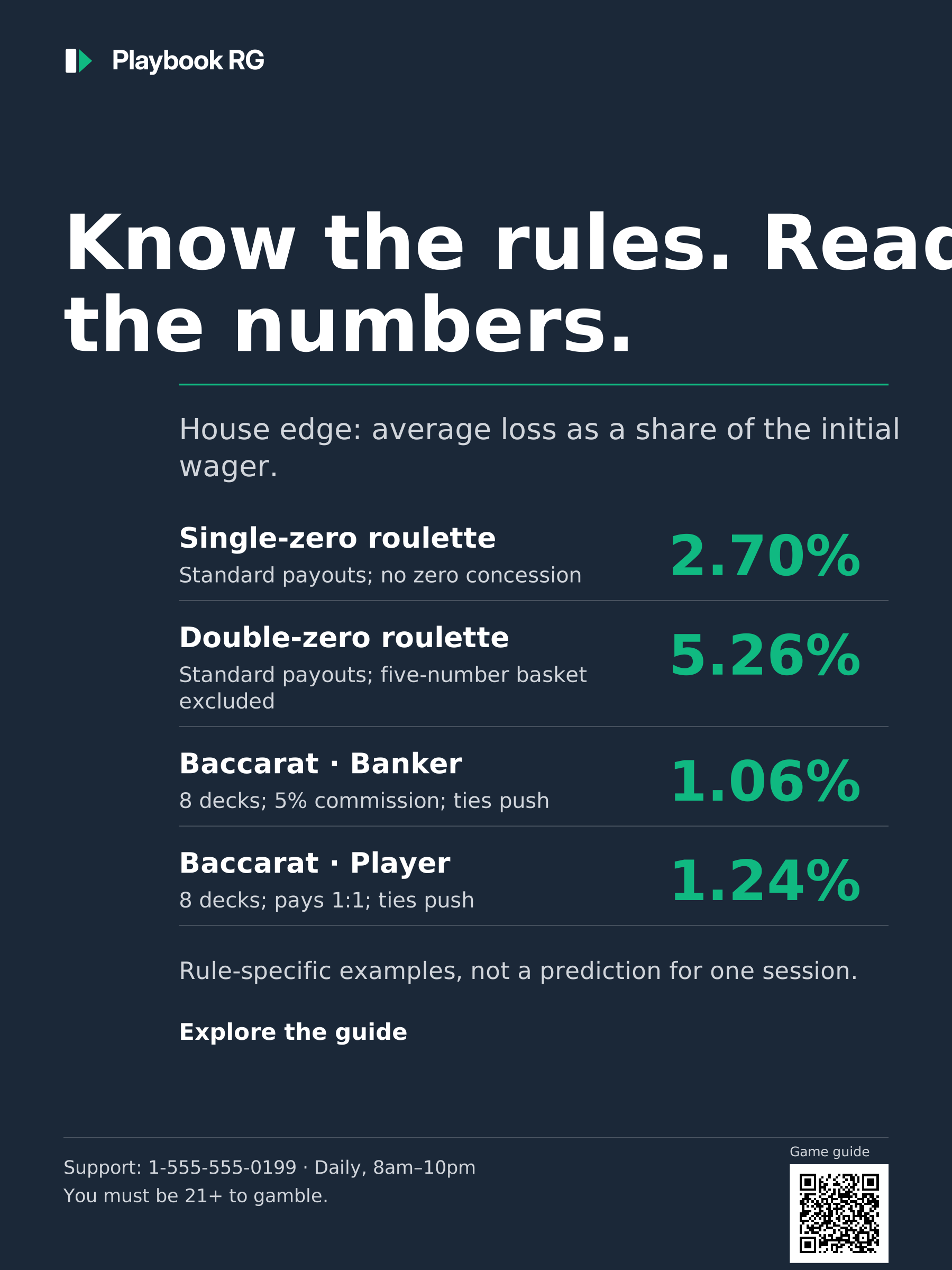
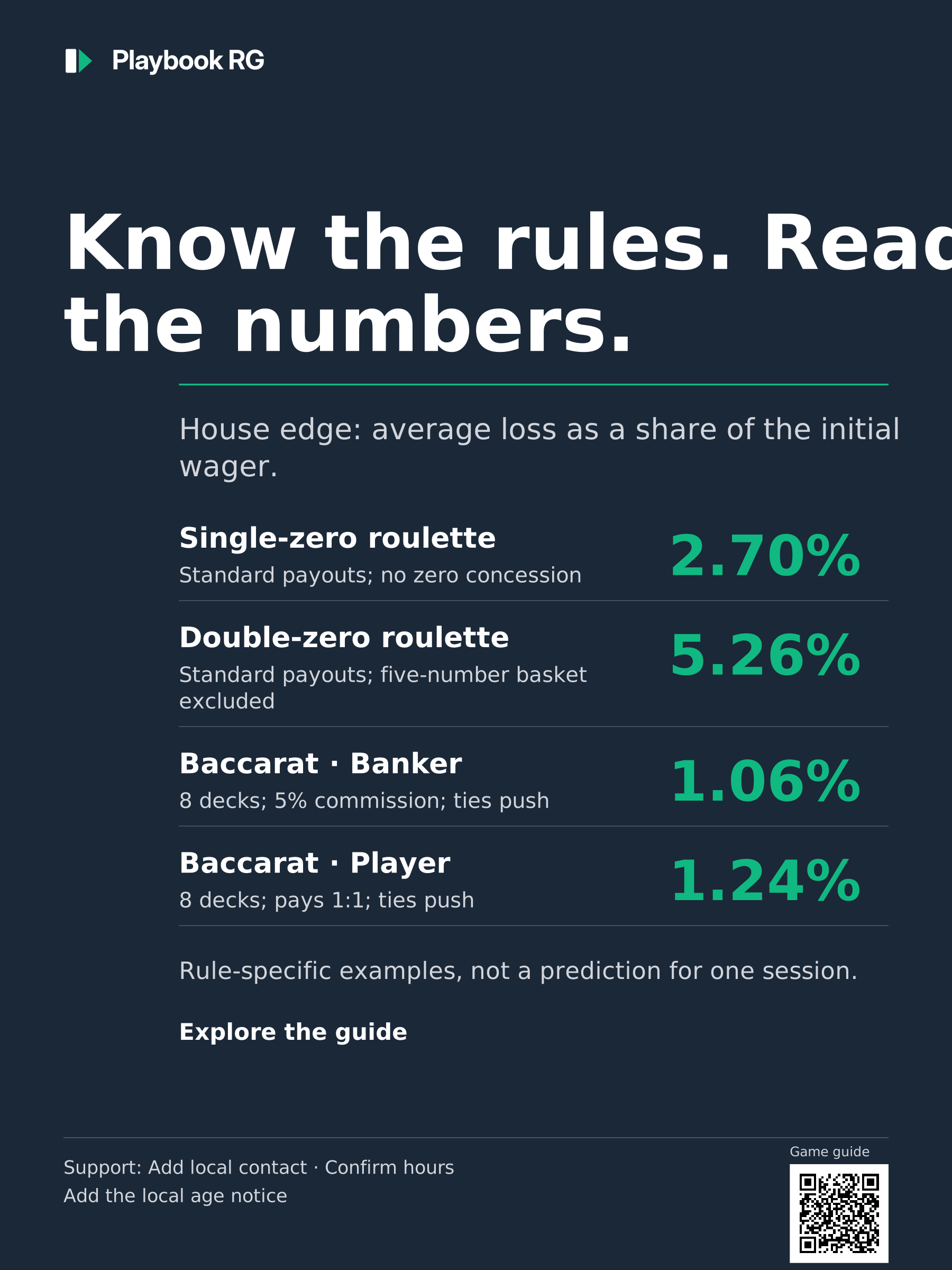
The Engagement Gap describes the difference in care and production quality between commercial marketing and player education. A hard-to-find footer link or unreadable notice can satisfy a layout brief while failing the person trying to use it. Review education for clarity, placement, accessibility and usefulness alongside the rest of the product.
{{PROGRAM_NAME}} provides a brand and content system for this work. Its contribution is better education and clearer communication; it does not remove the need for compliance, harm prevention or support.
Narrator Script
Narrator: [transition slide] What does responsible gambling actually mean? It’s one of the most used phrases in the industry — and one of the least understood. Ask ten people and you’ll get ten answers.
[pause 5s]
That ambiguity isn’t harmless. When a phrase means everything, it means nothing. So let’s nail it down. At its core, responsible gambling means helping players manage how they spend their time and money on gambling. That’s the through-line.
[show three-stakeholders diagram] Every compliance framework, every helpline number, every piece of educational content exists to serve that single goal. But different stakeholders come at it from very different angles. The public expects transparency, accessible support, and genuine effort — not a checkbox exercise. Regulators set the compliance floor — helpline numbers, self-exclusion flows, age verification, mandatory messaging. And consumers — the players — want the information and tools to make good decisions. They don’t want to be lectured. They want to be equipped. This is where {{PROGRAM_NAME}} lives — giving players the information they need to make their own choices well.
[pause 2s] Before we move on, a quick gut-check. I’ll show you three pieces of real responsible-gambling content — the kind you’ve seen a hundred times — and each one is missing something. See if you can spot the gap in each, then continue.
[pause 3s]
[show engagement-gap split] Now here’s the problem {{PROGRAM_NAME}} exists to solve. Every operator invests heavily in commercial content — sleek apps, polished ads, generous bonuses. World-class creative. And their player education content? A wall of text buried in the footer. Written by compliance. Designed by nobody. This is the engagement gap — the gulf between the quality of commercial content and the quality of player education. {{PROGRAM_NAME}} closes that gap by treating player education as a marketing communications challenge, not a compliance requirement.
Section 2: The Information Gap
Reading
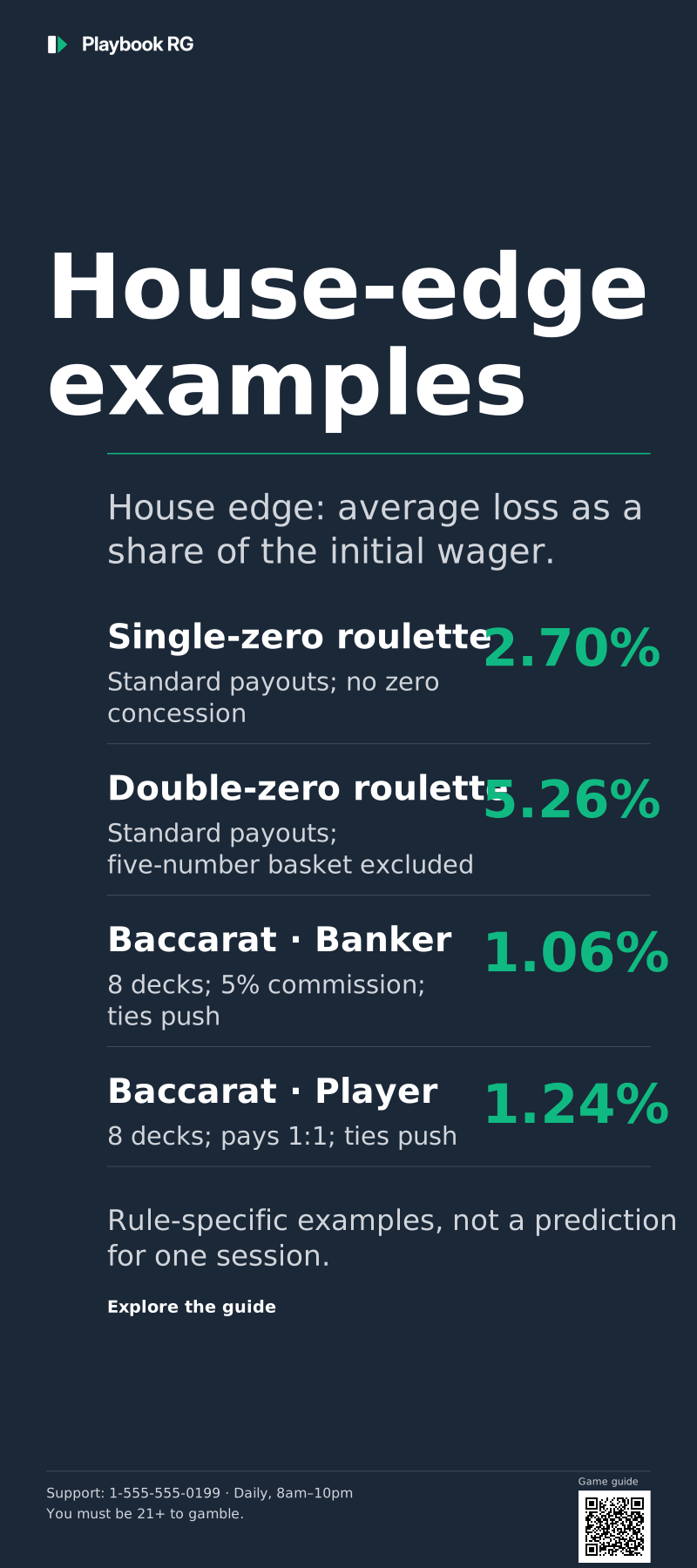
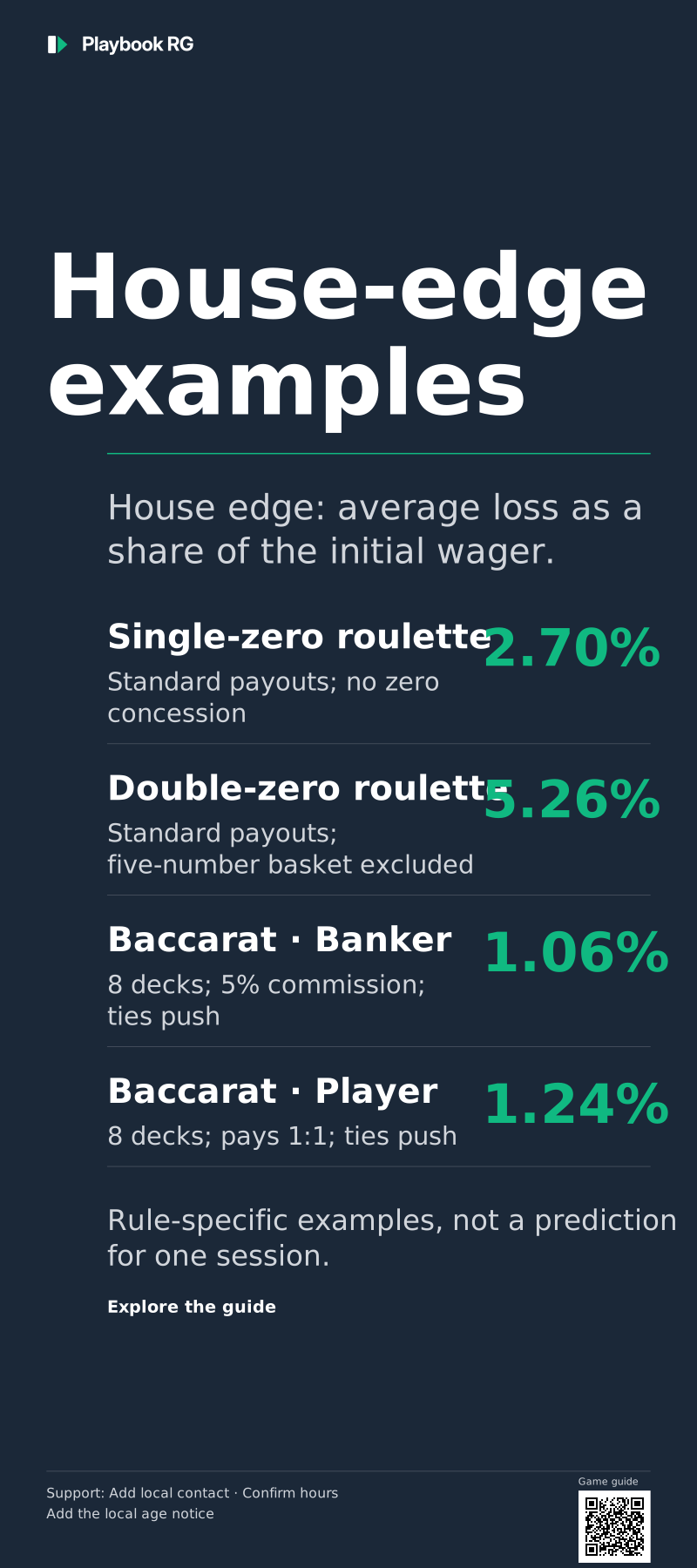
The Information Gap is the difference between the product knowledge held by the operator and the information available to a player. A betting line, a house-edge figure or a slot’s return-to-player percentage needs an explanation and its applicable conditions.
A useful explanation covers three questions:
- How do I play? Explain the rules and the actions available.
- How does the game work? Explain probability, payouts, house edge and variation where relevant.
- What could go wrong, and what can I do? Explain risks, tools, safeguards and support.
Four premises guide informed choice:
- People have different experiences of gambling. Routine education should be useful to recreational players while keeping support accessible to anyone who needs it.
- Gambling has a cost and uncertainty. House edge describes a long-run mathematical average under specified rules. It is not a price guarantee or a prediction for one session.
- Information and tools can help, but are not sufficient on their own. Difficulty can have several causes; safeguards and support remain essential.
- Responsibility is shared. Operators, regulators and support services have responsibilities alongside the choices available to players.
The framework draws on consumer information, information asymmetry and the balance between autonomy and duty of care. None of these ideas establishes that clearer information alone prevents harm.
Three complementary layers organize the work:
| Layer | Main purpose | Examples |
|---|---|---|
| Compliance | Meet applicable requirements | Age verification, required notices, required self-exclusion processes |
| Public Health | Address outcomes and conditions across a population | Prevalence research, advertising policy, treatment funding, harm monitoring |
| Informed Choice | Give individuals clear information and usable tools | Game guides, odds explainers, activity records, optional session reminders |
A single tool can serve more than one layer. A required session reminder is also a compliance measure; an accessible helpline can support both compliance and individual choice. In the exercise, use the stated purpose and context to identify the leading layer.
Operator integration point: Check your mandatory training and internal policies for local obligations. This brand framework does not replace them.
Narrator Script
Narrator: [transition slide] The Informed Choice Model. Gambling is a complicated product. Every game involves probability, expected value, house edge, variance, and game-specific mechanics. A minus-110 betting line, a 35-to-1 roulette payout, a 96% RTP on a slot machine — these numbers carry real financial meaning, but most players can’t decode them without help.
[show information-gap diagram] Operators understand this math deeply — their business model depends on it. Players generally don’t. This Information Gap means players can’t make fully informed choices — and that means they’re more likely to put themselves at risk. Closing that gap is {{PROGRAM_NAME}}‘s core job.
[show four-premises grid] The informed choice framework rests on four premises. First, many people who gamble do so as entertainment. Second, gambling has a cost — the house edge — and understanding that cost supports a more informed choice. Third, information and tools matter, but they work inside a wider system of safeguards and support. And fourth, responsibility is shared across players, operators, regulators, and support services.
[pause 3s]
Where does this come from? Three fields. Consumer psychology shows people make better purchasing decisions when product information is clear and honest. Economic adverse selection tells us that when one party knows far more than the other, outcomes suffer. And liberal ethics — the balance between personal liberty and duty of care. Informed choice is the middle path: equip people to make their own decisions, then respect those decisions.
[show three-layers stack] Three complementary layers work together. Compliance sets the floor — mandatory standards every operator meets. Public health addresses population-level outcomes — prevalence research, advertising restrictions, harm monitoring. And informed choice empowers individual consumers through education and tools. These aren’t competing alternatives. {{PROGRAM_NAME}} operates at the informed choice layer while respecting the others.
Exercise: Classify the Layer
Type: scenario
Instructions: Pick the leading layer for each item: Compliance, Public Health or Informed Choice. Some items fit more than one; the stated purpose decides.
| Item | Correct Category | Feedback Correct | Feedback Incorrect |
|---|---|---|---|
| A footer helpline number displayed to meet a stated local regulatory requirement | Compliance | It’s displayed to meet a local requirement, so Compliance leads. | Compliance fits better. A helpline can help players too, but the cue here is a local display requirement. |
| National prevalence study | Public Health | Prevalence research tracks gambling across a whole population. That’s Public Health. | Public Health fits better. The cue is “prevalence study”: it measures gambling across a whole population, not one player. |
| Interactive odds calculator | Informed Choice | It helps one player understand the odds and decide for themselves. That’s Informed Choice, where {{PROGRAM_NAME}} works. | Informed Choice fits better. It’s a tool one player uses to understand the odds, not a rule or a population study. |
| An age-verification check required by the applicable licence | Compliance | The licence requires this check, so Compliance leads. | Compliance fits better. The cue is “required by the applicable licence”. |
| A national policy restricting gambling advertising to reduce population exposure | Public Health | It aims to reduce exposure across a whole population. That’s Public Health. | Public Health fits better. The cue is its aim: reducing exposure across the population. |
| An optional session-time reminder that the player chooses to help track their play | Informed Choice | The player chooses this reminder to track their own play, so Informed Choice leads. | Informed Choice fits better. The cue is “optional”: the player chooses it. If a rule required it, Compliance would lead. |
Section 3: The Two-Tier System
Reading
Choose the tier from the person’s current task and the evidence available. A routine question about game rules and an explicit request for help need different responses.
| Tier 1: Routine education | Tier 2: Support | |
|---|---|---|
| Purpose | Explain games, numbers and tools | Respond to difficulty, distress or a request for support |
| Tone | Clear, confident; humor where appropriate | Warm, direct and without humor |
| Examples | Game guides, myth explanations, routine tool information | Support contacts, account choices, self-exclusion information and crisis routes where relevant |
Information alone may not answer a support need. A person can understand a game and still experience difficulty or impaired control. Respond to what they say, make help accessible and follow the appropriate process. A behavioral pattern can warrant review; it does not give a content writer a diagnosis.
A support-page visit, pause request or self-exclusion choice is enough reason to provide the requested information without delay. It does not by itself establish a crisis. Conversely, the absence of a help request is not proof that everything is fine.
Keep support accessible from routine education. Retain required warnings, notices and safeguards. Explain the scope and conditions of each account option; an ordinary break and formal self-exclusion are different processes.
Narrator Script
Narrator: [transition slide] The Two-Tier System. The informed choice model makes a critical assumption: that players are making rational decisions. For the vast majority, that holds. But not always.
Some players gamble in ways that suggest difficulty — not because they lack information, but because impulse, habit, or loss of control overrides their ability to act on what they know. A player who understands house edge intellectually may still chase losses when emotions take over. Information alone doesn’t fix this. It’s a fundamentally different problem. That’s why {{PROGRAM_NAME}} operates on two tiers.
[show Tier 1/2 comparison] Tier 1 is the routine education register. It equips players with knowledge and tools — limits, reminders, odds education, myth-busting, and game guides — in an engaging voice. Tier 2 is the support register for moments involving difficulty, distress, or a request for help. It is warm, direct, stripped of decoration, and focused on connecting the person with the right support. Choose the tier from the moment, not a quota.
[pause 5s] How do you know when a player has moved from Tier 1 into Tier 2? You look for behavioral indicators — escalating deposits, chasing losses, increasing session length, repeated limit increases, or searching for support content. Notice what’s not on this list: clinical diagnostic criteria. Players don’t self-diagnose from clinical checklists. What works is behavioral description — language like spending more than you planned rather than clinical terminology.
[pause 3s]
Most operators get the ratio backwards. They treat all player education as crisis prevention — making it feel clinical and irrelevant to the majority. {{PROGRAM_NAME}}‘s approach: make Tier 1 content so genuinely engaging that players choose to interact with it, while Tier 2 support stays always one tap away. Both tiers are essential. And the non-negotiable rule: Tier 2 is always accessible from any Tier 1 context.
[pause 2s] One more before the test. Take a single touchpoint and flip it between the two tiers — watch how the same message changes the moment a player might need support. Toggle through it, then continue.
Module Test
Narrator: [transition slide] Time to check what you’ve learned. Five questions, covering responsible gambling foundations, the informed choice model, and the two-tier system. You need 80% — that’s four out of five — to mark this module complete. Take your time. If you don’t pass on the first try, you can review the material and retake the test.
Question 1
Assesses: Learning objective 1
Stem: What does “responsible gambling” ultimately mean in practice?
| Option | Text |
|---|---|
| A | Preventing people from gambling |
| B | Helping players manage how they spend their time and money on gambling |
| C | Operators disclosing their profit margins |
| D | Requiring players to pass a quiz before they can bet |
Correct: B
Explanation: It’s the practical aim this framework starts from. Education is one part of that work, alongside rules, safeguards and support.
Source: Introduction
Question 2
Assesses: Learning objective 1
Stem: In the layered model, what is the relationship between Compliance, Public Health, and Informed Choice?
| Option | Text |
|---|---|
| A | They are competing approaches — operators must choose one |
| B | They are complementary layers — Compliance is the floor, Public Health is the population lens, Informed Choice is individual empowerment |
| C | Informed Choice replaces the need for Compliance |
| D | Public Health is only relevant for regulators, not operators |
Correct: B
Explanation: Each covers a different responsibility: required standards, population outcomes, and information and tools for individuals. None replaces another; {{PROGRAM_NAME}} works in Informed Choice.
Source: Brand Foundation
Question 3
Assesses: Learning objective 2
Stem: Why is gambling described as a “complicated product”?
| Option | Text |
|---|---|
| A | Because the rules are hard to learn |
| B | Because the math behind odds, house edge, and probability isn’t intuitive — and operators have more information than players |
| C | Because there are too many games to choose from |
| D | Because regulations vary by jurisdiction |
Correct: B
Explanation: It’s the Information Gap: a betting line or house-edge figure needs its rules and conditions explained, and the operator holds that knowledge.
Source: Brand Foundation
Question 4
Assesses: Learning objective 3
Stem: What is the fundamental distinction between Tier 1 and Tier 2 content?
| Option | Text |
|---|---|
| A | Tier 1 is for new players, Tier 2 is for experienced players |
| B | Tier 1 assumes rational decision-making with good information; Tier 2 addresses players in difficulty |
| C | Tier 1 is optional, Tier 2 is mandatory |
| D | Tier 1 is digital, Tier 2 is in-person |
Correct: B
Explanation: The situation decides, not topic or diagnosis: routine education and tools are Tier 1; difficulty, distress or a request for help is Tier 2.
Source: Voice and Tone
Question 5
Assesses: Learning objective 2
Stem: What is the “engagement gap” that {{PROGRAM_NAME}} addresses?
| Option | Text |
|---|---|
| A | The gap between how much players gamble and how much they should |
| B | The gap between the quality of commercial content and the quality of player education content |
| C | The gap between online and land-based gambling experiences |
| D | The gap between what regulators require and what operators provide |
Correct: B
Explanation: The gap is in care and production quality: a hard-to-find footer link can meet a layout brief and still fail the person using it.
Source: Introduction
Key Takeaways
- Responsible gambling includes product safeguards, appropriate regulation, support and clear information. Education is one part of that work.
- Give player education the same production care as other communications, with useful information and an obvious next step.
- Explain the rules, the odds, the limits of any figures, and the tools available to the reader.
- Compliance, public health and informed choice address different responsibilities. They work together.
- Use Tier 1 for routine education and Tier 2 for support. Respond to the person’s stated need; do not require a risk label before helping.
- Keep support accessible throughout. Verify the actual route, destination and service availability.
Source basis
You don’t need to read these but they’re published research related to the module’s framework — in case a colleague asks.
- Blaszczynski, A., Ladouceur, R., & Shaffer, H.J. (2004). A science-based framework for responsible gambling: The Reno Model. Journal of Gambling Studies, 20(3), 301-313. Why it’s here: the original statement of the informed-choice model — the four premises {{PROGRAM_NAME}} builds on.
- Akerlof, G.A. (1970). The market for “lemons”: Quality uncertainty and the market mechanism. Quarterly Journal of Economics, 84(3), 488-500. Why it’s here: the canonical statement of the adverse-selection problem — the economic backbone of the Information Gap argument.
- Calado, F. & Griffiths, M.D. (2016). Problem gambling worldwide: An update and systematic review of empirical research (2000-2015). Journal of Behavioral Addictions, 5(4), 592-613. Why it’s here: a global systematic review of problem-gambling prevalence — the empirical baseline the informed-choice model rests on (the substantial majority of players gamble without difficulty), with broader geographic coverage than any single-jurisdiction study.
References
| Resource | What to use it for |
|---|---|
| Introduction | The engagement gap, the {{PROGRAM_NAME}} approach |
| Brand Foundation | The informed-choice framework, the four premises, the three complementary layers |
| Voice and Tone | The two-tier system, tier registers, behavioral indicators |
Spot the Gap
Demonstration
Tier Toggle
Compare the same touchpoint in both tiers. The tier follows the player’s situation, not the topic.
Tier 1Informative
Set your entertainment budget
Decide what you can afford to spend before playing. A deposit limit caps money added to the account; it does not cap losses.
Explore deposit limitsTier 1 note: Routine education. It says what the tool covers and what it doesn’t, then gives one clear route.